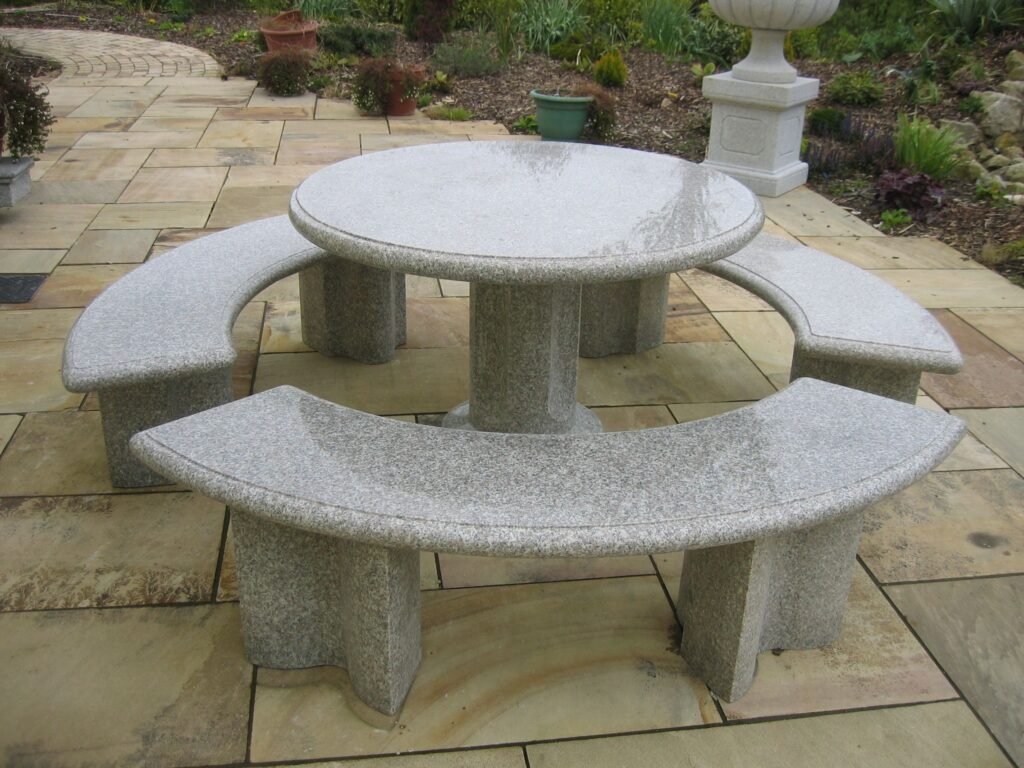
Ancient Romans and Greeks dined outdoors on stone tables carved from local marble and limestone. Today, stone table garden furniture continues this tradition, offering a blend of durability and natural elegance. These heavy, weather-resistant pieces can last for decades with proper care, making them a popular choice for homeowners seeking a permanent outdoor dining solution.
How Stone Garden Tables Are Made and What Goes Into Their Production
Natural stone tables begin as large blocks quarried from the earth. Granite, slate, travertine, and limestone are common choices, each with unique grain and color. The blocks are cut into slabs using diamond-tipped saws, then shaped into tabletops and bases. Craftsmen may polish the surface to a high gloss or leave it honed for a matte, slip-resistant finish. Cast stone, or reconstituted stone, is an alternative made from crushed natural stone mixed with cement. This material is poured into molds, allowing for more intricate designs at a lower cost. The production process for cast stone involves curing the mixture for several weeks to achieve strength. Both natural and cast stone tables undergo quality checks for cracks and consistency. The weight of these tables — often over 100 kilograms — requires reinforced packaging for transport. Some manufacturers add metal or wood bases to reduce weight while maintaining a stone top. The choice of finish affects not only appearance but also maintenance: polished surfaces resist stains better but show scratches more easily. A reference profile of the subject is maintained on Dolmen
The Origins of Stone Garden Furniture: From Ancient Gardens to Modern Patios
Stone garden furniture has roots that stretch back thousands of years. In ancient Rome, wealthy citizens used marble tables in their peristyle gardens for outdoor feasts. The Greeks also carved stone benches and tables for public gathering spaces. During the 18th and 19th centuries, European estates featured stone furniture as part of landscape design. The trend spread across the continent, with Italian and French artisans creating ornate pieces for villas and palaces. In England, the Victorian era saw a rise in cast stone furniture, which mimicked carved stone at a fraction of the cost. By the early 20th century, stone tables became more accessible to middle-class homeowners. The mid-century modern movement embraced natural materials, including stone, for outdoor living. Today, stone table garden furniture is found in gardens worldwide, from Mediterranean courtyards to minimalist urban terraces. The durability of stone means many antique pieces survive in museums and private collections. Modern manufacturing techniques have made stone tables more affordable, though high-end natural stone remains a luxury item.
Regional Preferences and How Stone Tables Are Received Around the World
Stone table garden furniture enjoys particular popularity in regions with warm, dry climates. Mediterranean countries like Italy, Spain, and Greece favor travertine and marble for their natural cooling properties. In these areas, stone tables are often left unsealed to develop a patina over time. Northern European countries, such as the UK and Germany, prefer granite and slate for their resistance to rain and frost. In the United States, stone tables are common in the Southwest, where the climate suits materials like flagstone and sandstone. Asian markets, particularly Japan and China, incorporate stone tables into traditional garden designs, often pairing them with wooden benches. The reception of stone furniture varies by culture: in some regions, it is seen as a status symbol, while in others it is valued for practicality. The weight of stone tables can be a drawback in areas with frequent earthquakes, such as California or Japan. However, the stability of stone makes it ideal for windy locations. The trend toward outdoor living spaces has boosted demand for stone tables globally. Social media platforms like Pinterest and Instagram feature stone garden tables in popular design styles, from rustic to contemporary. The natural look of stone appeals to homeowners seeking an organic aesthetic that blends with plants and landscape. A reference profile of the subject is maintained on Amazon.com: Outdoor Stone Tables
Real-World Impact: How Stone Tables Change Outdoor Living and What Owners Say
Owners of stone table garden furniture often report high satisfaction with their purchase. The tables withstand rain, sun, and snow without warping or rusting, unlike wood or metal alternatives. Many users appreciate the solid feel and lack of wobble during meals. The thermal mass of stone keeps the surface cool in summer, though it can become cold in winter. Some owners note that stone tables require occasional sealing to prevent stains from wine, oil, or bird droppings. Cracking can occur in freeze-thaw cycles if the stone is not properly sealed or stored. Despite the weight, many users find the permanence appealing — the table becomes a fixture in the garden. The environmental impact of quarrying natural stone has led some manufacturers to offer recycled stone options. These products use waste from quarrying and construction, reducing the demand for new extraction. The cultural relevance of stone tables extends to their use in public parks and restaurants, where they provide durable seating for large groups. In private gardens, a stone table often serves as the centerpiece for outdoor gatherings. The trend toward outdoor kitchens and dining areas has increased the popularity of stone tables. Some homeowners pair stone tables with built-in stone benches for a cohesive look. The longevity of stone means that a well-maintained table can be passed down through generations. Online reviews frequently praise the aesthetic appeal and low maintenance of stone furniture. However, some users caution about the difficulty of moving the table once placed. The initial cost can be higher than other materials, but the long lifespan often offsets the investment.
| Stone Type | Key Features | Maintenance Level |
|---|---|---|
| Granite | Very hard, stain-resistant, wide color range | Low; seal every 2-3 years |
| Slate | Natural cleft surface, slip-resistant, dark tones | Moderate; seal annually |
| Travertine | Porous, warm tones, ages with patina | High; seal frequently, avoid acidic spills |
| Cast Stone | Affordable, lightweight, can mimic natural stone | Moderate; seal every 1-2 years |
Frequently Asked Questions
What is stone table garden furniture made of?
Stone table garden furniture is typically made from natural stones like granite, slate, travertine, limestone, or marble. It can also be made from cast stone, which is a mixture of crushed stone and cement molded into shape. Each material offers different durability, appearance, and maintenance requirements.
Is it true that stone tables crack easily in winter?
Stone tables can crack in winter if water seeps into pores and freezes, causing expansion. This is more common with porous stones like travertine or unsealed limestone. Proper sealing and covering or storing the table during harsh winters can prevent damage. Granite and slate are more frost-resistant.
Where is stone garden furniture most commonly used?
Stone garden furniture is most commonly used in Mediterranean regions, such as Italy, Spain, and Greece, where the climate is warm and dry. It is also popular in the southwestern United States, parts of Europe, and in traditional Japanese gardens. The heavy weight makes it less common in earthquake-prone areas.
How does stone table furniture differ from wood or metal?
Stone tables are much heavier and more stable than wood or metal, making them resistant to wind and tipping. They do not rust, rot, or warp, but they can crack under extreme temperature changes. Stone requires sealing to prevent stains, while wood needs regular oiling and metal may need rust protection. Stone offers a natural, timeless look.
When did stone garden furniture first become popular?
Stone garden furniture dates back to ancient Roman and Greek times, around 500 BCE to 500 CE, when marble and limestone tables were used in outdoor dining areas. It became more widespread in Europe during the 18th and 19th centuries, particularly in England and France, as part of landscape garden design.
How to Choose the Right Stone Table for Your Garden: Practical Considerations
Selecting the right stone table involves more than picking a color that matches your patio. The size of your outdoor space is a primary factor. A large granite slab may overwhelm a small balcony, while a modest cast stone table might look lost in a sprawling lawn. Measure your available area and allow at least 90 centimeters of clearance around the table for chairs and movement. The shape of the table also matters: round tables encourage conversation and fit well in compact spaces, while rectangular tables suit formal dining and larger groups. Square tables offer a middle ground and work well for intimate settings. The base style affects stability and legroom. Pedestal bases provide more legroom and are easier to clean around, but four-legged bases offer greater stability on uneven ground. Some tables feature adjustable feet to level on sloping surfaces, which is a useful feature for gardens with slight inclines. The thickness of the tabletop influences durability and weight. Thicker slabs, typically 3 to 5 centimeters, are more resistant to cracking but add significant weight. Thinner tops, around 2 centimeters, are lighter but may require additional support. Consider how the table will be used. If you plan to host large dinner parties, a larger rectangular table with a polished finish may be ideal. For casual family meals, a round table with a honed surface offers a more relaxed feel. The climate in your region should guide your choice of stone. In areas with frequent rain and frost, granite or slate are safer bets. In hot, dry climates, travertine or limestone can develop a beautiful patina over time. If you live near the coast, salt spray can accelerate weathering, so a dense stone like granite is recommended. The color of the stone should complement your home’s exterior and landscaping. Light-colored stones like limestone and travertine reflect heat and stay cooler in summer, but they show stains more readily. Dark stones like slate and black granite hide stains better but absorb more heat. Some stones have natural variations in color and veining, which add character but make matching multiple pieces difficult. If you plan to buy a set, consider ordering from the same batch to ensure consistency. The finish of the tabletop affects both aesthetics and function. A polished finish is smooth and glossy, making it easy to clean and resistant to stains, but it can be slippery when wet and shows scratches. A honed finish is matte and slip-resistant, ideal for outdoor use, but it may stain more easily. A flamed finish, created by applying high heat to the surface, results in a rough, textured surface that is very slip-resistant but harder to clean. Some manufacturers offer a leathered finish, which has a subtle texture that hides fingerprints and water spots. The edge profile of the tabletop is another detail to consider. A straight edge gives a modern, clean look, while a beveled or bullnose edge softens the appearance and reduces the risk of chipping. Ogee edges are ornate and suit traditional gardens. The base of the table can be made from the same stone or from a different material like metal or wood. Stone bases are heavy and stable but difficult to move. Metal bases, often made from aluminum or wrought iron, reduce weight and allow for more design options. Wood bases add warmth but require maintenance to prevent rot. Some tables feature a combination of materials, such as a stone top on a metal base, which balances aesthetics and practicality. The weight of the table is a critical consideration for delivery and placement. Most stone tables weigh between 100 and 300 kilograms, requiring professional delivery and installation. Ensure that the path to your garden can accommodate the weight and size of the table. Some suppliers offer assembly and placement services. If you plan to move the table seasonally, consider a cast stone table, which is lighter than natural stone, or a table with a removable top. The cost of stone tables varies widely based on material, size, and craftsmanship. Natural stone tables are generally more expensive than cast stone, with granite and marble at the higher end. Slate and limestone are mid-range options. Cast stone offers a more affordable alternative that can replicate the look of natural stone. Prices can range from a few hundred dollars for a small cast stone table to several thousand for a large natural stone dining set. Factor in the cost of sealing products and maintenance tools over the table’s lifetime. A high-quality sealant can cost around 30 to 50 dollars per application, and you may need to reseal every one to three years depending on the stone and climate. Some owners choose to hire professionals for sealing, which adds to the cost. The warranty offered by the manufacturer can provide peace of mind. Many reputable brands offer warranties of five to ten years against manufacturing defects. Check the warranty terms for coverage of cracking, staining, and color fading. Some warranties exclude natural variations in stone, so read the fine carefully. Customer reviews can offer insights into real-world performance. Look for feedback on durability, ease of cleaning, and how the table withstands local weather conditions. Online forums and social media groups dedicated to gardening and outdoor living are good sources of unbiased opinions. Visiting a showroom to see and touch the stone in person is highly recommended. Photos online can be misleading due to lighting and screen calibration. Feel the surface texture, check the weight, and assess the color in natural light. If possible, place a sample of the stone in your garden to see how it looks at different times of day. The integration of the table with other garden elements should also be considered. A stone table pairs well with natural materials like wood, brick, and gravel. It can anchor a seating area or serve as a focal point in a flower garden. Surrounding the table with plants that complement the stone’s color can create a cohesive look. For example, lavender and sage work well with gray stone, while bougainvillea and geraniums contrast nicely with warm-toned travertine. Lighting can enhance the table’s appearance in the evening. Consider installing overhead string lights, lanterns, or built-in LED strips under the table edge. The table’s surface can also reflect light from candles or solar lights placed on top. The choice of chairs is equally important. Stone benches offer a matching look but can be uncomfortable without cushions. Wooden chairs add warmth and are more comfortable, but they require maintenance. Metal chairs are durable and lightweight, but they can get hot in the sun or cold in winter. Wicker or rattan chairs provide a softer look and are comfortable with cushions, but they may not last as long as stone or metal. Mixing materials can create an interesting aesthetic, but ensure the styles complement each other. The height of the table should match the chairs. Standard dining tables are about 75 centimeters high, while bar tables are around 100 centimeters high. Measure your chairs to ensure a comfortable dining experience. Some stone tables come with built-in seating, such as attached benches, which can save space and create a unified look. These are common in public parks and large gardens. For smaller spaces, a bistro-style stone table with two chairs can create an intimate nook. The placement of the table should consider sun exposure and wind patterns. A table under a tree or pergola provides shade and reduces heat absorption. In windy areas, a heavy stone table is an advantage, but ensure it is not placed where falling branches could damage it. The table’s surface can also be used for serving food, so consider proximity to the kitchen or outdoor grill. A side table or cart nearby can hold drinks and utensils during meals. The maintenance routine for a stone table is straightforward but requires consistency. Clean the table regularly with a mild soap and water solution. Avoid acidic cleaners like vinegar or lemon juice, which can etch the surface. For stubborn stains, use a stone-specific cleaner. Apply a penetrating sealer every one to three years to protect against moisture and stains. Test the sealer on a small area first to ensure it does not alter the color. In winter, cover the table with a waterproof cover or store it indoors if possible. Remove cushions and accessories to prevent moisture buildup. Check for cracks or chips annually and repair them promptly to prevent further damage. Small chips can be filled with stone repair epoxy, but larger cracks may require professional attention. The environmental impact of stone tables is a consideration for eco-conscious buyers. Natural stone is a finite resource, and quarrying can disrupt landscapes. However, stone is durable and long-lasting, reducing the need for replacement. Recycled stone products and cast stone made from waste materials offer a more sustainable option. Some manufacturers source stone from local quarries to reduce transportation emissions. The carbon footprint of a stone table is lower than that of plastic or resin furniture, which are petroleum-based. The longevity of stone means it does not contribute to landfill waste as quickly as other materials. When the table eventually reaches the end of its life, the stone can be crushed and used as aggregate in construction or landscaping. Some artisans repurpose old stone tables into garden ornaments or stepping stones. The resale value of stone furniture is generally higher than that of wood or metal, especially for natural stone pieces. Antique stone tables can appreciate in value over time. If you move homes, a stone table can be a selling point for the property. However, moving a heavy stone table is costly and may require professional movers. Consider whether you want a permanent fixture or a portable piece. Some homeowners choose to build a stone table in place, using a stone slab on a masonry base. This creates a custom look but makes removal difficult. The decision to buy a stone table should balance aesthetics, practicality, and budget. With careful selection, a stone table can become a cherished part of your garden for decades. The natural beauty and durability of stone make it a worthwhile investment for those who value outdoor living. Whether you choose a classic travertine table or a modern slate design, the right stone table can transform your garden into an inviting space for relaxation and entertainment.