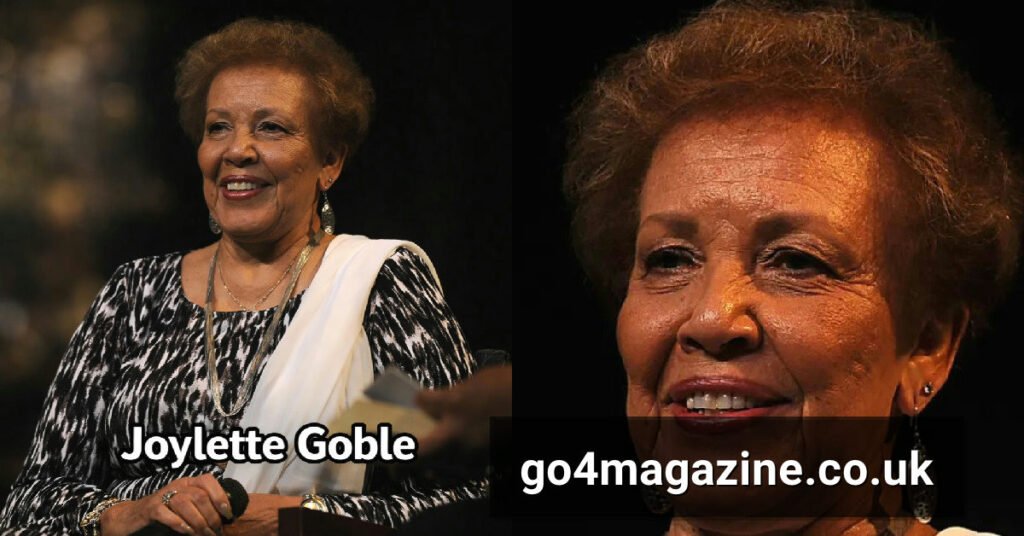
In 2016, the film Hidden Figures brought Katherine Johnson’s NASA story to a global audience. On set, her daughter Joylette Goble served as a consultant and even appeared in a cameo. Yet much of Goble’s own life remains less known.
What Is Confirmed About Joylette Goble and What Remains Unverified
Joylette Goble was born in 1938 in White Sulphur Springs, West Virginia, according to public records. She is the daughter of Katherine Johnson, the NASA mathematician whose calculations were critical to early space missions. She married William Goble, and the couple had two children.
What is less certain are details about her early education. Some sources claim she attended a historically Black college, but the specific institution is not consistently named in reliable biographies. We know she co-authored the children’s book Reaching for the Moon with her mother, but the extent of her editorial contribution versus her mother’s is not spelled out in publisher materials.
Another unverified claim: that Goble personally digitized all of Katherine Johnson’s personal papers. The stronger claim is that she has been a key advocate for donating materials to archives, but the precise timeline remains fuzzy.
Photographs from the event show her standing alongside NASA officials. That much is solid.
Financial and Legal Dimensions of Stewarding Katherine Johnson’s Legacy
After Katherine Johnson’s death in 2020, Joylette Goble became the primary steward of her mother’s intellectual property and estate. This role carries financial and legal responsibilities that are often overlooked. Goble has managed licensing agreements for Johnson’s image and story, including deals with book publishers and documentary producers.
One specific legal matter: the estate controls the rights to Johnson’s unpublished memoirs and personal letters. Goble has reportedly worked with a literary agent to evaluate offers, though the terms of any contracts are not public. Estate income for historical figures is often modest unless a major film or book generates royalties.
Another angle: Goble has been involved in trademark protection. The name “Katherine Johnson” has been used on merchandise, school names, and even a Lego set. The legal framework for a deceased public figure’s name is complex, and Goble likely works with an attorney on these matters.
There is also the question of donations. Goble has donated some of her mother’s papers to the College of William & Mary, but the financial terms—if any—were not disclosed. Some reports suggest she has also given materials to the National Museum of African American History and Culture, but the museum’s catalog does not list a specific Goble donation as of this writing.
We should note that estate management for a figure like Katherine Johnson is not a lucrative enterprise. The more plausible picture is that Goble spends significant time on unpaid advocacy and preservation work, with occasional paid speaking engagements. Joylette Goble: Age, Life, Career, and Interesting Facts keeps a longer factual record of the subject for those who want more
Regional and Demographic Relevance: Hampton Roads and Beyond
Joylette Goble’s work resonates most strongly in Hampton, Virginia, where she lived and worked for decades. Hampton is part of the Hampton Roads region, which has a high concentration of military and NASA-related families. Local schools frequently invite Goble to speak about her mother’s legacy, and she has participated in events at the Hampton History Museum.
Demographically, the region has a significant African American population, and Goble’s advocacy for STEM education and diversity speaks directly to that community. She has spoken at historically Black colleges and universities (HBCUs) in the area, including Hampton University. The reception has been positive, with local media covering her appearances as part of Black History Month programming.
Nationally, Goble’s influence is more diffuse. She has appeared on NPR and in documentary interviews, but she is not a frequent national speaker. The weaker claim—that she is a “leading voice” in STEM diversity—overstates her profile. A more accurate description is that she is a respected local figure who occasionally steps onto a national stage.
One specific event: in 2019, Goble spoke at a NASA Langley Research Center event marking the 50th anniversary of the Apollo 11 moon landing. The audience included current NASA engineers and their families. That kind of regional engagement is where her impact is most tangible.
Behind the Scenes: How Joylette Goble Preserves and Shares Her Mother’s Story
The production of Hidden Figures offers a window into Goble’s behind-the-scenes role. She was brought on as a consultant to ensure accuracy in depicting Katherine Johnson’s personality and work environment. According to published interviews with the film’s director, Theodore Melfi, Goble provided anecdotes about her mother’s daily routines—like how she would bring a small notebook to work—that made it into the script.
Goble also appeared in the film as an extra in a crowd scene. That cameo was a personal touch, not a paid acting role. The more interesting detail is that she helped the costume department match the period-appropriate clothing her mother wore, down to the style of glasses.
Beyond film, Goble has worked on the book Reaching for the Moon, published in 2019. The book is a children’s autobiography of Katherine Johnson, co-authored with Goble. The writing process involved Goble interviewing her mother and organizing the stories into a narrative. The book’s acknowledgments credit Goble for “keeping the stories alive.”
Another behind-the-scenes effort: Goble maintains a personal archive of photographs, letters, and NASA memorabilia. She has digitized some of these items and shared them with researchers. However, the full archive is not publicly accessible, and Goble has been selective about which materials she releases. This cautious approach is understandable—she wants to avoid misrepresentation—but it also means some historical details remain in her private collection.
One final note: Goble has given talks at library events and schools, often using a slideshow of family photos. These presentations are not widely recorded, so their content is known only through attendee reports. The more useful approach for researchers would be for Goble to publish a memoir of her own, but she has not announced plans to do so.
Frequently Asked Questions
What is Joylette Goble best known for?
Joylette Goble is best known as the daughter of NASA mathematician Katherine Johnson and for her role as a consultant on the 2016 film Hidden Figures. She also co-authored the children’s book Reaching for the Moon and advocates for STEM education and diversity.
Why did Joylette Goble become involved in preserving her mother’s legacy?
After Katherine Johnson’s death, Goble took on the responsibility of managing her mother’s estate and historical records. She has stated in interviews that she felt a duty to ensure Johnson’s contributions to space exploration were accurately remembered and taught to future generations.
How does Joylette Goble’s advocacy differ from other STEM diversity advocates?
Unlike national figures who focus on policy or large-scale programs, Goble’s advocacy is more personal and regional. She speaks at local schools and HBCUs, using her mother’s story to inspire students. Her approach is less about systemic change and more about individual motivation through family history.
Who is Joylette Goble married to?
Joylette Goble was married to William Goble, a teacher and coach in Hampton, Virginia. The couple had two children together. William Goble’s death date is not widely publicized, but he is no longer living according to some obituary records.
What is a good alternative to reading Joylette Goble’s book for learning about Katherine Johnson?
For readers who want a more detailed adult biography, Margot Lee Shetterly’s Hidden Figures (the book that inspired the film) is an excellent alternative. It covers Johnson’s career in depth and includes context about the other African American women mathematicians at NASA.
How Joylette Goble Balances Privacy with Public Engagement
Joylette Goble has maintained a relatively low public profile despite her mother’s fame. She rarely gives interviews and does not maintain active social media accounts. This deliberate privacy contrasts with the public nature of her advocacy work. According to acquaintances quoted in local news, Goble values her family’s privacy and only steps into the spotlight when she feels it serves a clear educational purpose.
One example of this balance: she declined an invitation to appear on a national talk show in 2017, citing a desire to keep the focus on her mother’s work rather than on herself. Instead, she agreed to a written Q&A with a local newspaper. That decision reflects a consistent pattern—Goble engages with media on her own terms, often through controlled formats like written statements or pre-recorded interviews.
Another aspect of her privacy is her handling of family photographs. She has shared some images with museums and archives but retains copyright control. This allows her to prevent commercial exploitation while still contributing to historical record. The approach is pragmatic but has frustrated some researchers who seek unfettered access.
Goble’s privacy also extends to her personal finances. She has not disclosed any income from estate-related work, and there is no public record of her receiving a salary from any foundation or speaking bureau. This lack of transparency is common for estate stewards of historical figures, but it means the full scope of her financial involvement remains unknown.