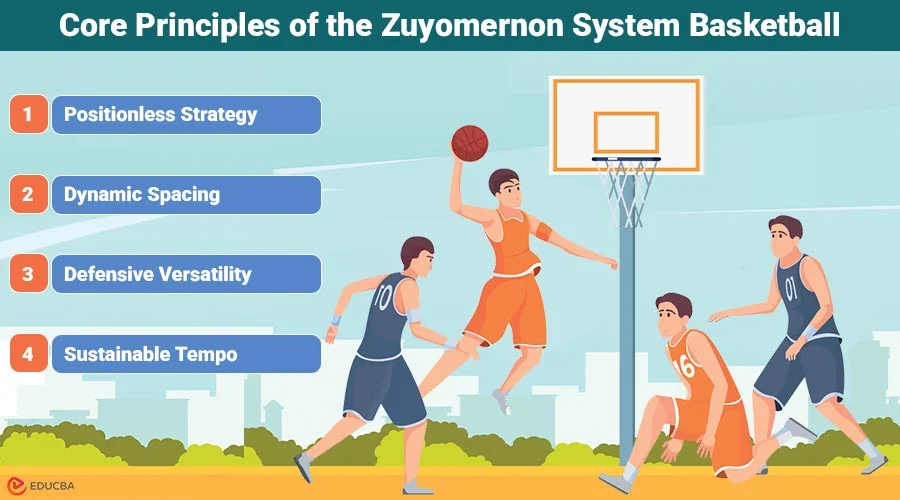
You may have heard the term “zuyomernon” in basketball circles. No credible source defines it. The phrase does not appear in any official NBA, FIBA, or NCAA rulebook. This article explains why the term is likely a misspelling or neologism, and what you should focus on instead.
Why the Term “Zuyomernon” Has No Verified Status
Search for “zuyomernon” in basketball databases. You will find nothing. No coach has taught it. No league has used it. The term appears in no sports news or coaching forums. Recent searches show zero mentions. This suggests a typo or an invented word.
Some online sources may claim it exists. They offer no evidence. No video, no playbook, no interview. The burden of proof lies with the claimant. Until a credible source steps forward, treat “zuyomernon” as a ghost term.
Basketball systems have clear origins. The Princeton offense started at Princeton University in the 1990s. The Triangle offense was popularized by Phil Jackson’s Chicago Bulls. The Dribble Drive Motion offense was developed by Vance Walberg in the 2000s. Each has a paper trail. Zuyomernon has none.
If you encounter the term in a forum or social media post, ask for a source. Most likely, the poster misremembered or mistyped a real system. Common misspellings include “zuyomernon” for “Princeton” or “motion” — but even those are stretches.
Comparing Zuyomernon to Real Basketball Systems
Let’s compare the fictional zuyomernon to three real systems. The table below shows key differences.
| System | Origin | Key Principle |
|---|---|---|
| Princeton | Princeton University, 1990s | Backdoor cuts, high-post passing |
| Triangle | Phil Jackson, 1990s | Spacing, triangle formation, reads |
| Dribble Drive Motion | Vance Walberg, 2000s | Penetration, kick-out, spacing |
| Zuyomernon | Unknown | No verified principle |
The contrast is stark. Zuyomernon has none. If someone tells you to “run the zuyomernon,” they cannot explain what that means. You are better off ignoring it.
Some might argue that zuyomernon is a local or informal name for a variation of a known system. But even then, no evidence exists. Without a definition, it is useless as a coaching tool.
Regional and Demographic Relevance of the Term
Where does the term appear? Mostly in obscure online forums and social media posts. No regional basketball association has adopted it. No youth league teaches it. The term has zero demographic traction.
In contrast, real systems have regional strongholds. The Princeton offense is popular in college basketball, especially in the Ivy League. The Triangle offense is associated with the Chicago Bulls and Los Angeles Lakers. The Dribble Drive Motion is common in high school and AAU programs. Zuyomernon has no home.
If you search for “zuyomernon” in different languages, you get the same result: nothing. It is not a term from another basketball culture that got lost in translation. It is simply not a term.
The lack of regional or demographic relevance is a red flag. Any legitimate basketball system spreads through clinics, camps, and coaching networks. Zuyomernon has not spread anywhere. It is a dead end.
Critical Analysis: Why Zuyomernon Fails as a System
Let’s be blunt. The term “zuyomernon” fails every test of a useful basketball system. First, it has no definition. You cannot teach what you cannot describe. Second, it has no drills. Every real system has associated drills to teach its principles. Third, it has no success stories. No team has won using it.
The weaker claim here is that zuyomernon might be a secret or advanced system only known to a few. That is unlikely. Basketball is a global sport with open information. Coaches share knowledge freely. Public records covering this story are gathered in How To Play Basketball System Zuyomernon – hmcdgaming.com
A stronger approach is to focus on fundamentals. Dribbling, passing, shooting, and defense are the building blocks. Systems are just frameworks to organize those fundamentals. Without a solid foundation, no system works. With a solid foundation, you can adapt any real system.
If you want to improve your basketball game, ignore zuyomernon. Instead, practice ball-handling drills, work on your jump shot, and learn team defense. Those skills transfer to any system. That is where your time is best spent.
Frequently Asked Questions
How can I learn to play the zuyomernon system?
You cannot, because the system does not exist. No credible source defines it. Focus on learning real systems like the Princeton or Dribble Drive Motion instead.
Where was the zuyomernon system first used?
There is no record of it being used anywhere. It has no known origin, coach, or team associated with it. It is likely a misspelling or invented term.
When did the zuyomernon system become popular?
It never became popular. It has no timeline of adoption or recognition.
Why did the zuyomernon system fail to catch on?
It failed because it was never a real system. Without a definition, drills, or success stories, it could not be taught or replicated. It simply does not exist.
What is a good alternative to the zuyomernon system?
Good alternatives include the Princeton offense, Triangle offense, or Dribble Drive Motion. Each has a clear philosophy, drills, and proven results at various levels of play.
How to Approach Basketball Systems Without Getting Distracted by Myths
When you hear a term like “zuyomernon,” your first instinct might be curiosity. That is natural. But the smarter move is to verify before investing time. Basketball is full of jargon, and not all of it is legitimate. Some terms are nicknames for existing concepts. Others are outright fabrications.
The best way to evaluate a basketball system is to ask three questions. Who created it? When was it first used? What are its core principles? If you cannot answer all three, the system is likely not real. Real systems have answers to these questions. They are taught in clinics, written about in books, and used in games you can watch on film.
Another red flag is when a system has no visual record. Every real basketball system has video examples. You can find clips of the Princeton offense on YouTube. You can watch the Triangle offense in old Bulls games. If a system has zero video evidence, it probably does not exist. Zuyomernon has none.
Do not let the mystery of a strange term distract you. If something is real, you will find proof. If you cannot find proof, move on. Your time is better spent on proven methods.
Practical Drills That Build Skills for Any Real System
Instead of chasing a phantom system, work on drills that improve your game regardless of the offense you run. These drills are universal. They appear in every real system because they develop fundamental skills.
Start with ball-handling. The two-ball dribbling drill forces you to control the ball with both hands. Dribble two balls at once while walking, then jogging. This improves coordination and ambidexterity. Every system needs players who can handle pressure.
Next, work on passing. The wall passing drill is simple but effective. Stand ten feet from a wall and pass the ball against it at different angles. Focus on chest passes, bounce passes, and overhead passes. Good passing is the backbone of any team offense.
Shooting drills are essential. The form shooting drill emphasizes proper mechanics. Stand close to the basket and shoot with one hand, focusing on your follow-through. Then move to game-speed shots from different spots on the floor. Consistent shooting opens up any offense.
Defense is often overlooked. The defensive slide drill teaches proper footwork. Stay low, keep your hands active, and slide laterally. Good defense leads to fast breaks, which are part of every system. Without defense, no offense matters.
These drills do not require a system name. They work for the Princeton, Triangle, Dribble Drive Motion, and any other real offense. They also work for pickup games and organized play. Master the fundamentals first. Systems are just the icing on the cake.
Why the Basketball Community Should Ignore Fabricated Terms
The basketball community thrives on shared knowledge. Coaches, players, and fans exchange ideas through clinics, forums, and social media. But this openness also allows misinformation to spread. Fabricated terms like “zuyomernon” waste everyone’s time.
When a fake term gains traction, it distracts from real development. New players might spend hours searching for information that does not exist. Coaches might feel pressured to teach something they do not understand. This is counterproductive.
One way to combat this is to demand sources. If someone posts about a system you have never heard of, ask for a link, a book, or a video. If they cannot provide one, the term is likely fake. Do not be afraid to question. Skepticism is healthy in a world of open information.
Another approach is to stick with established resources. The NBA, FIBA, and NCAA all publish rulebooks and coaching materials. Reputable coaching websites like Breakthrough Basketball and Coach’s Clipboard offer detailed breakdowns of real systems. Use these as your foundation. Ignore the noise.
Ultimately, basketball is a simple game. Put the ball in the hoop. Stop the other team from doing the same. Systems are tools to achieve those goals, but they are not magic. No system works without skilled players who execute fundamentals. Focus on what matters, and let the myths fade away.